

Nur Mohammad
SAF Scholar, Bangladesh
Through
my research titled
‘Assessing Drought Propagation from Meteorological to Hydrological Drought
in Contrasting Climatic Zones in Sri Lanka: Past and Future,’ I explore
how droughts transition across stages and affect water systems in diverse
climates. The findings aim to advance global understanding of drought dynamics
and contribute to more effective water management and climate adaptation
strategies.

S Shalini
SAF Scholar, Sri Lanka
Through
my research titled
‘Assessing Drought Propagation from Meteorological to Hydrological Drought
in Contrasting Climatic Zones in Sri Lanka: Past and Future,’ I explore
how droughts transition across stages and affect water systems in diverse
climates. The findings aim to advance global understanding of drought dynamics
and contribute to more effective water management and climate adaptation
strategies.

Tenzin Namgay
SAF Scholar, Bhutan
My study, ‘Projecting Chubda
Glacier Lake Outburst Flood Risk in the Downstream Chamkhar Chhu Basin,
Bhutan,’ examines the potential threats posed by glacial hazards to
downstream communities. This research is intended to inform early warning
systems and climate-resilient planning in high-risk mountainous regions.
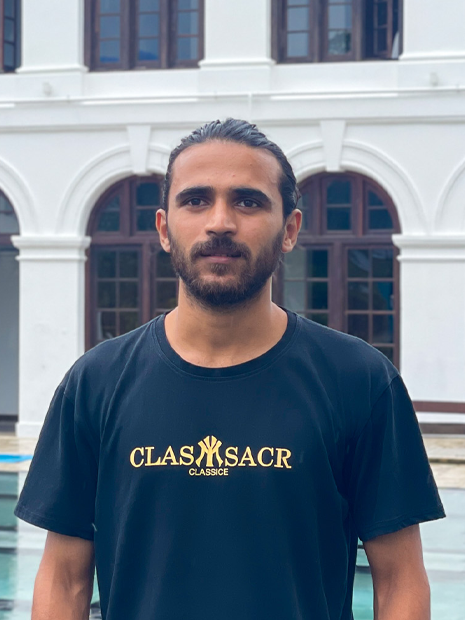
Saroj Sedai
SAF Scholar, Nepal
Driven by the need to understand climate
extremes in sensitive environments, my research, ‘Assessing Drought-to-Flood
Transitions in a Snow-fed Himalayan Basin: Attributed to Snowmelt and
Precipitation Variability Under Climate Change’, focuses on how shifting
climate patterns influence the occurrence of droughts followed by floods. The
study aims to inform early warning systems and promote adaptive water resource
planning in vulnerable mountain ecosystems.
A J F Mazeera
SAF Scholar, Sri Lanka
My research, ‘Analysis of the Human-Water Nexus and Development of a Predictive Framework for the Gal Oya River Basin in Sri Lanka: A Comparative Study of Drought and Non-Drought Periods,’ examines how human activities and water systems interact under varying climatic conditions. By comparing drought and non-drought periods, this study aims to develop a predictive framework that can support sustainable water management, strengthen community resilience, and guide informed decision-making in the Gal Oya River Basin.
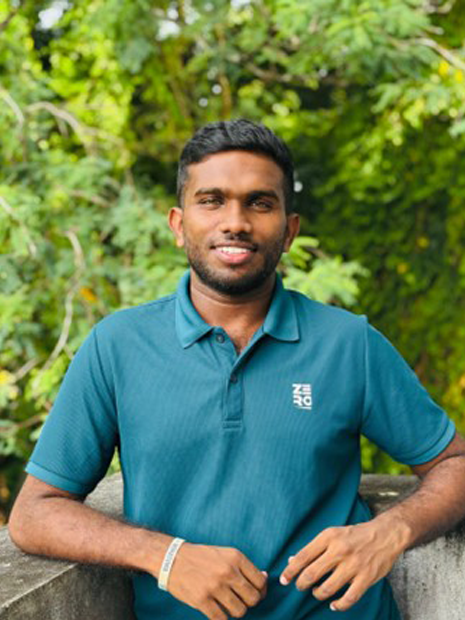
S M S D Karunarathna
Research Scholar, Sri Lanka
With growing concerns over groundwater depletion and climate uncertainty, my research, ‘Integrating Remote Sensing and Hybrid Machine Learning for Developing a Gridded Groundwater Level Dataset for Different Climate Scenarios in Sri Lanka’, seeks to create high-resolution groundwater datasets using advanced data-driven techniques. This work aims to enhance groundwater monitoring and support sustainable water management under future climate scenarios.
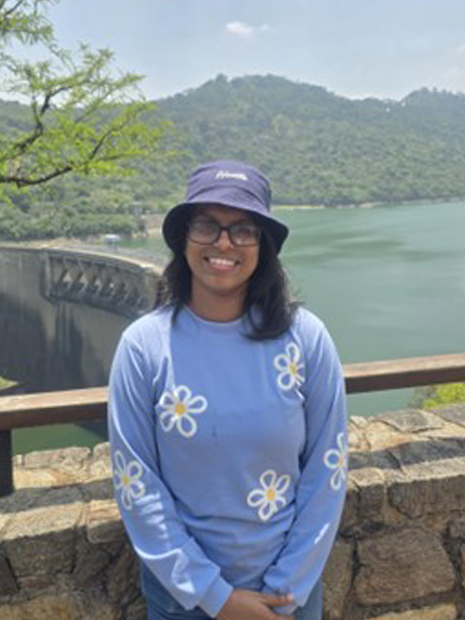
M N N K Peiris
Research Scholar, Sri Lanka
With increasing challenges posed by climate change, my research, ‘Developing a High-Resolution Gridded Precipitation Dataset for Sri Lanka Based on Grid Sensitivity to Streamflow Estimations under Climate Vulnerability’, focuses on generating detailed precipitation datasets to improve streamflow predictions. This study aims to support more accurate hydrological modelling and strengthen climate-resilient water resource planning.
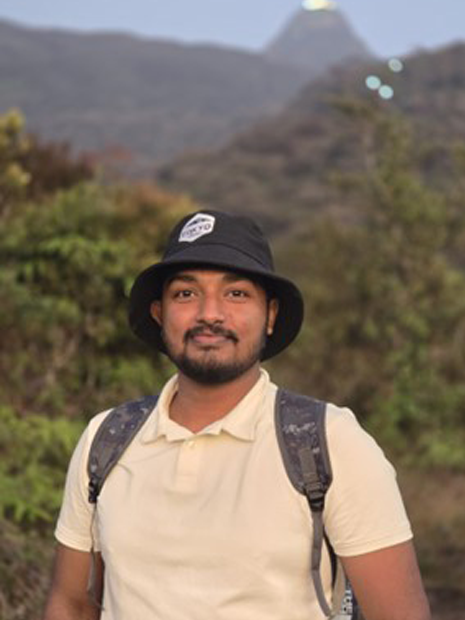
P V R P Madhumal
Research Scholar, Sri Lanka
With the challenge of limited gauging data in many catchments, my research, ‘Integrating Remote Sensing and Supervised Machine Learning Techniques for Runoff Prediction in Ungauged Catchments through Spatiotemporal Catchment Similarity Analysis’, aims to develop accurate runoff predictions by leveraging remote sensing data and machine learning. This work supports improved hydrological forecasting and water resource management in data-scarce regions.
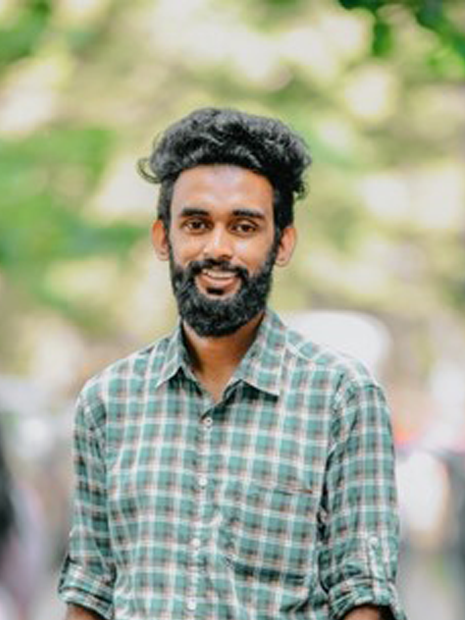
W M S Tharuka
Research Scholar, Sri Lanka
My research, ‘Dynamic Optimization of Water Allocation for Hydropower and Agricultural Productivity in a Sri Lankan Reservoir System under Future Climate Variability,’ focuses on enhancing the efficiency of water resource use by balancing hydropower generation and agricultural demands. It aims to support sustainable reservoir operation strategies in the face of climate uncertainty.
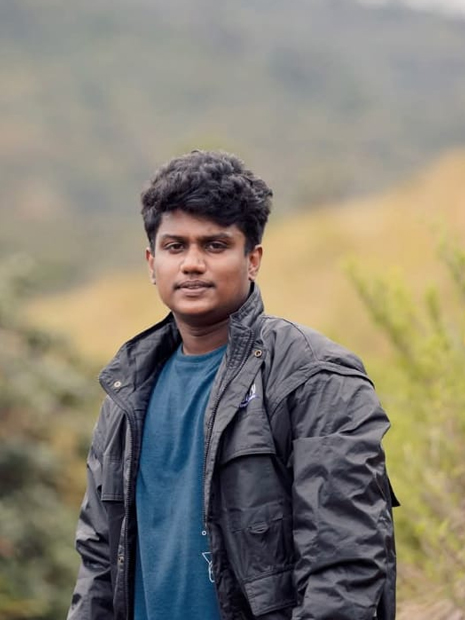
K H T Chamika
2025 SAF Research Scholar, Sri Lanka
Through my research titled “Quantifying Seasonal Vegetation Encroachment and Flood Risk in Urban Wetlands using Remote Sensing”, I utilize advanced satellite data to create 3D maps that monitor how invasive vegetation clogs water channels during dry seasons. The findings aim to provide authorities with a practical tool to prioritize canal maintenance and significantly reduce flood risks in Colombo under extreme weather scenarios.
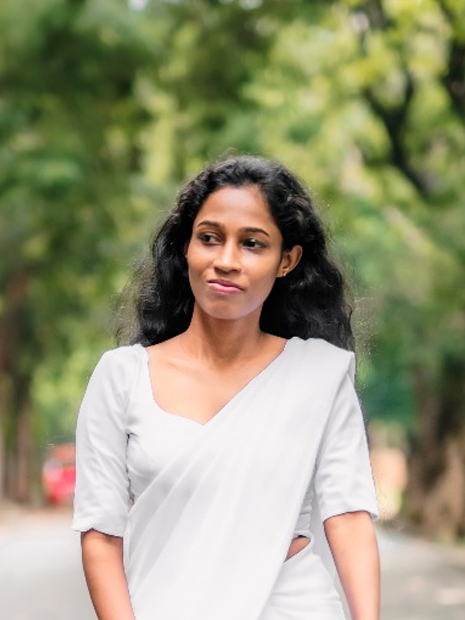
J B A Srimali
2025 SAF Research Scholar, Sri Lanka
In my research titled “Ecosystem Service Vulnerability under Drought-to-Flood Hydrological Whiplash: Implications for Ecological Security,” I assess how rapid shifts from drought to flooding affect key ecosystem services. By integrating drought and flood indices with remote sensing data, I map how these sequential extremes weaken ecological networks and expose vulnerable ecological sources and corridors. The findings aim to provide a multi-hazard ecological security framework that strengthens climate resilience in river basins.
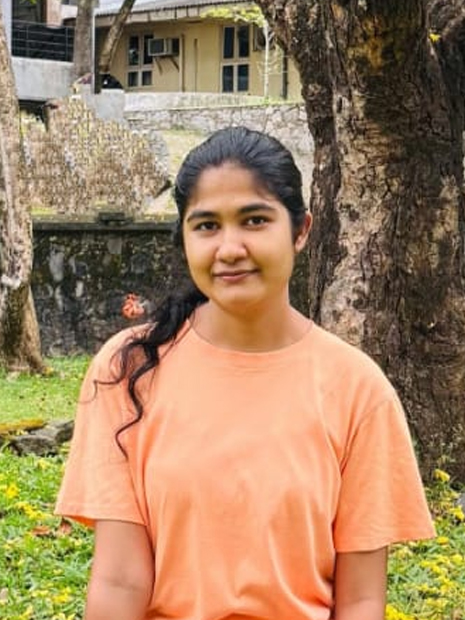
S P J Thisurika
2025 SAF Research Scholar, Sri Lanka
Accurately estimating return flow remains a challenge. My research, ‘Advancing Irrigation Water Balance: A Generalized Framework for Agricultural Return Flow Optimization under Variable Site Conditions’, focuses on developing a generalized framework that provides reliable estimates of return flow under varying site conditions. This framework will offer an accessible tool for engineers, water resource planners, and researchers working across different regions.
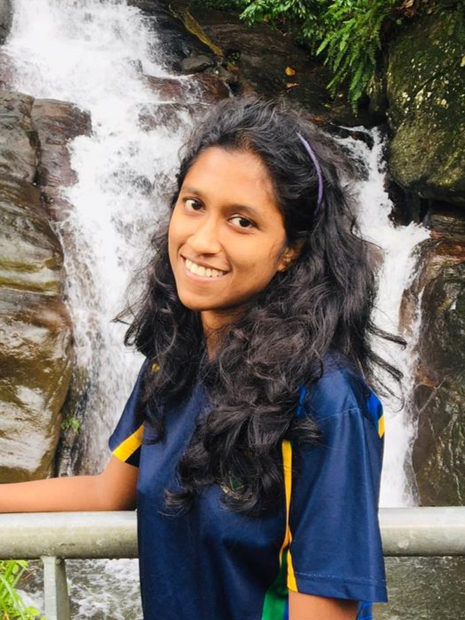
Y A D K H Wijayarathna
2025 SAF Research Scholar, Sri Lanka
My research, titled ‘Domain-Adaptive Sensor Fusion for Robust Soil Moisture Nowcasting in Extreme Environments,’ develops a deep learning framework that uses transfer learning to improve soil moisture estimation in data-scarce regions. The findings aim to provide near-real-time, high-resolution data essential for advancing hydrological forecasting and supporting climate-resilient water management and agricultural planning.
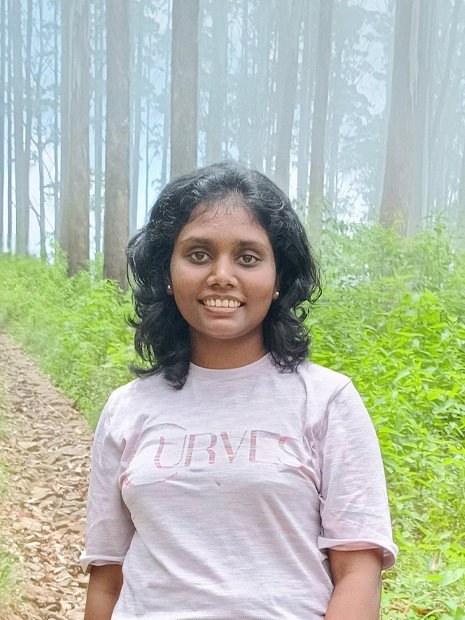
S V Subasinghe
2025 SAF Research Scholar, Sri Lanka
My research titled “Climate-Adaptive Reservoir Operation for Ungauged Systems: A Hydrological Modeling and Machine Learning Framework” develops a transferable decision-support framework to optimize reservoir operation in ungauged reservoirs under changing climate conditions. The findings will support sustainable reservoir management in ungauged systems, strengthening regional water security against increasing climate variability.

M W W P Senarathna
2025 SAF Research Scholar, Sri Lanka
My research, titled ‘Dynamic Hydro-Ecological Zoning: Integrating Hydrology, Remote Sensing, and Socio-Economic Drivers under Climate and Land-Use Change,’ develops a dynamic hydro-ecological zoning framework that integrates hydrology, landscape, and socio-economic factors. The methodology uses remote sensing data and a GIS framework to create dynamic zoning maps for past, present, and future scenarios, specifically to assess GHG emission reporting and watershed changes. The findings aim to identify priority areas for conservation and climate-resilient water management, supporting sustainable planning and policy.
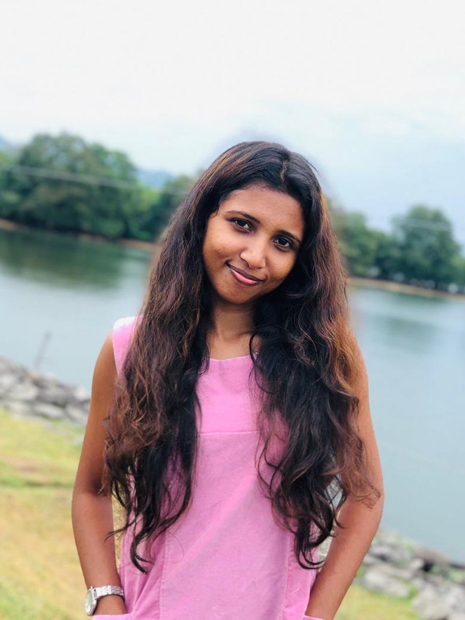
H D O N Sandamini
2025 SAF Research Scholar, Sri Lanka
My research, titled “Enhancing Flood Resilience through Optimized Blue-Green Infrastructure Design under Consecutive Rainfall Extremes,” focuses on addressing urban flooding through the design and optimization of Blue-Green Infrastructure (BGI), including wetlands, retention areas, and green spaces. The aim of this research is to identify the most effective types of BGI and develop optimized designs capable of withstanding consecutive rainfall extremes. Ultimately, the study demonstrates how strategically planned BGI can reduce stormwater impacts, enhance urban flood resilience, and support sustainable, cost-effective flood management in urban and peri-urban areas in Sri Lanka.