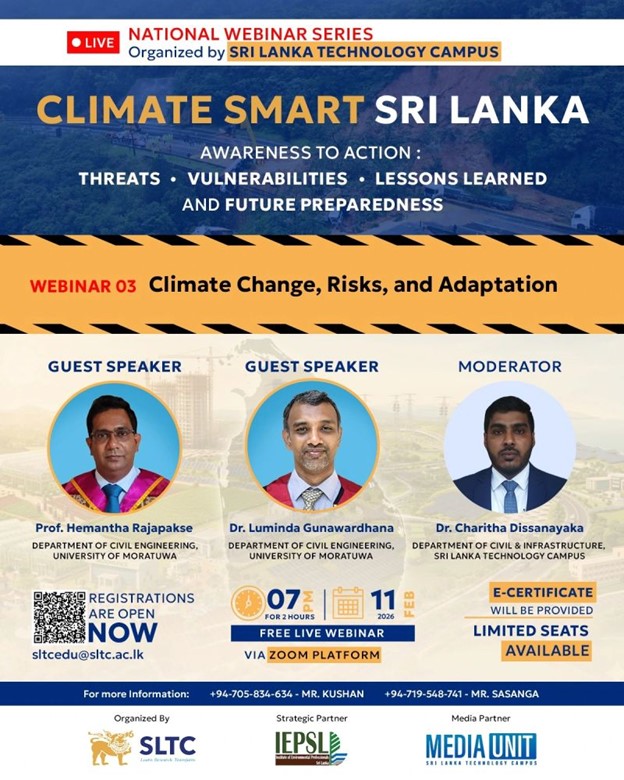

UMCSAWM Experts Share Insights at SLTC Climate Smart Sri Lanka Webinar Series
The UNESCO Madanjeet Singh Centre
for South Asia Water Management (UMCSAWM) at the University of Moratuwa
participated in the third session of the Climate Smart Sri Lanka – National
Webinar Series, organized by Sri Lanka Technology Campus (SLTC). The
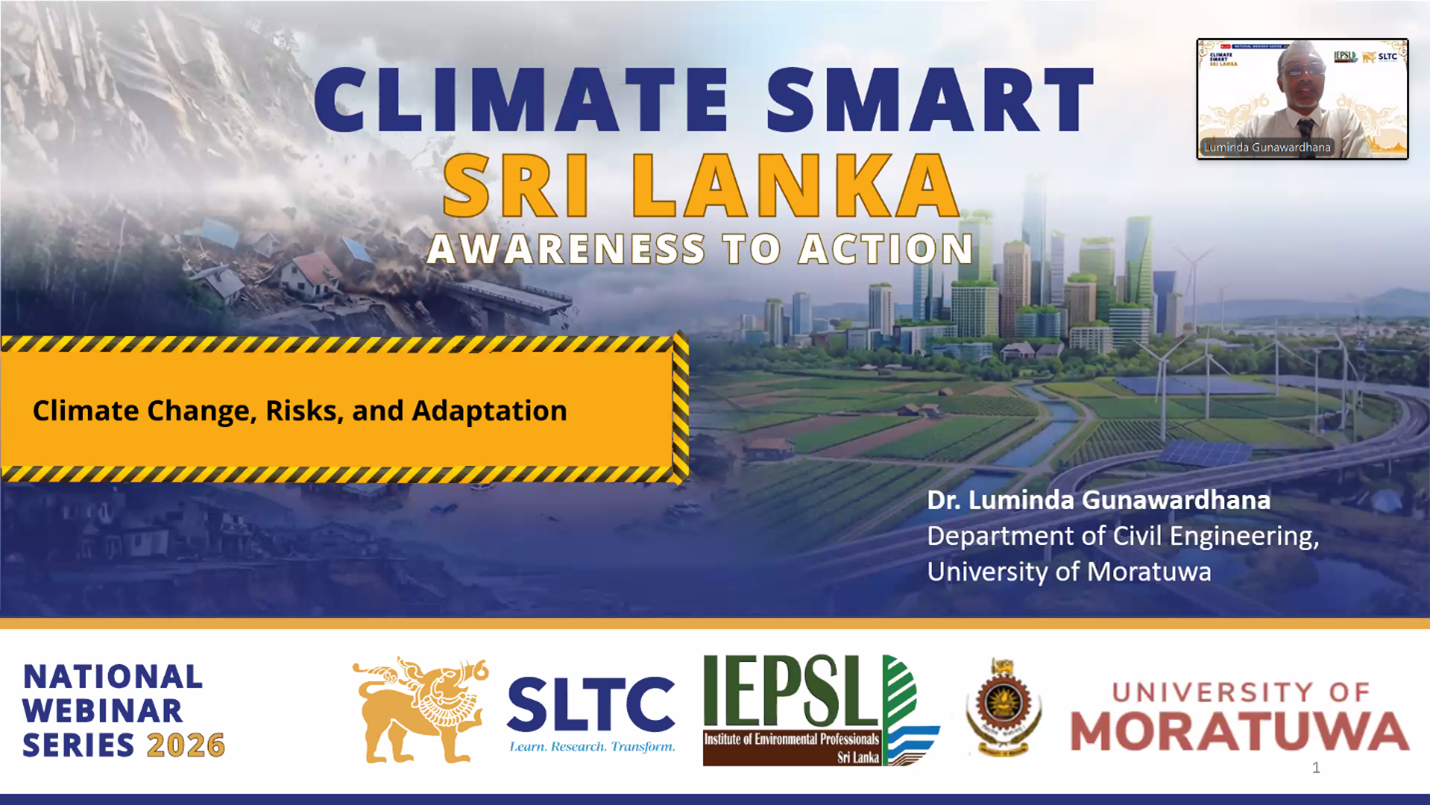
webinar, titled “Climate Change, Risks, and Adaptation,” was held on 11 February
2026 via Zoom, bringing together experts to discuss emerging challenges in
climate resilience.
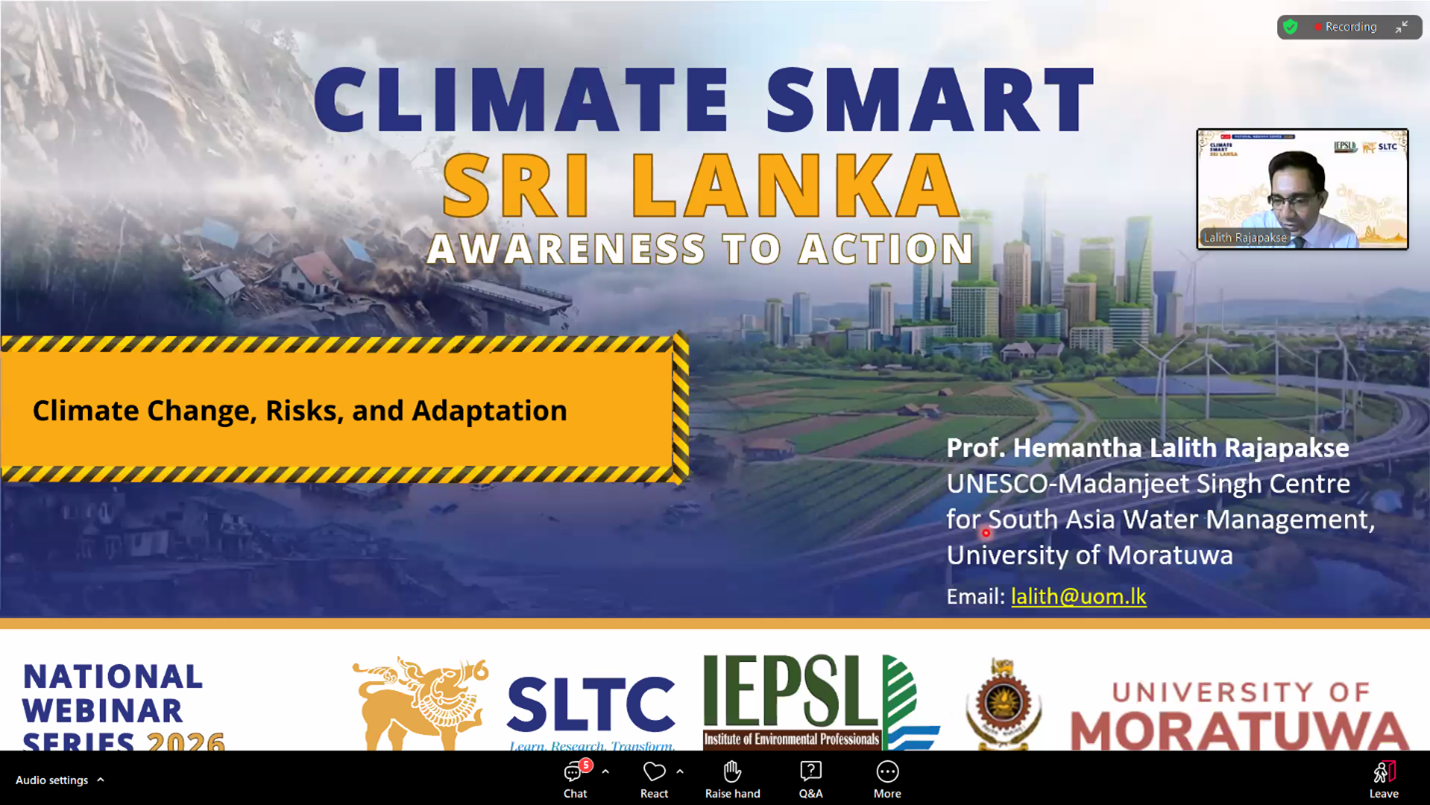
Representing UMCSAWM, Prof. Lalith
Rajapakse, Centre Chairman of UMCSAWM and UNESCO Chairholder, and Dr. Luminda
Gunawardhana, Senior Lecturer of the University of Moratuwa, served as the guest
speakers. The session was moderated by Dr. Charitha Dissanayaka, Department
Head, Civil & Infrastructure Engineering and Senior Lecturer of SLTC.
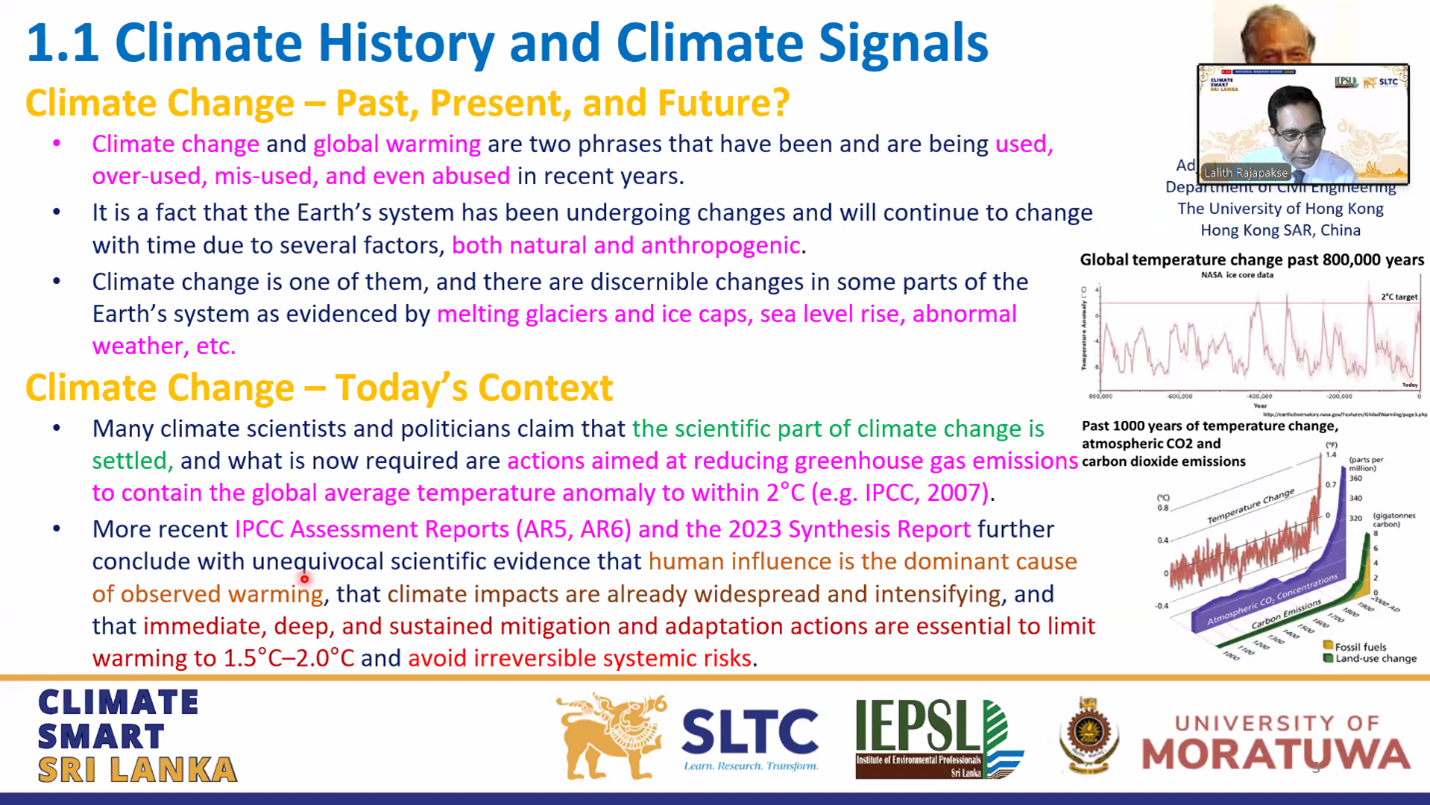
Prof. Lalith Rajapakse presented a compelling overview of
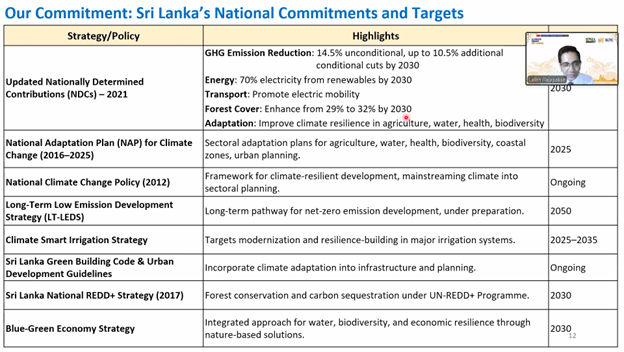
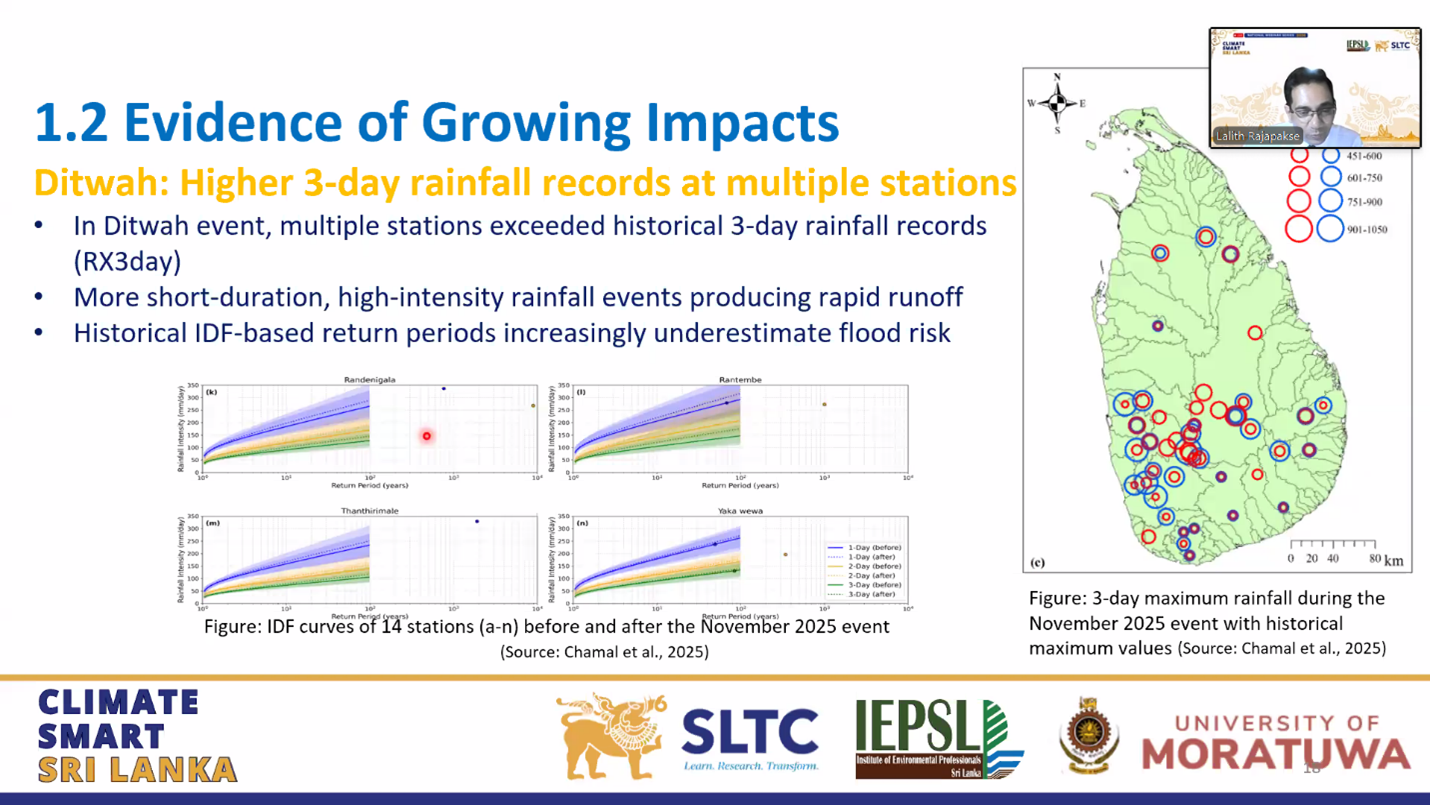
Sri Lanka’s rapidly intensifying climate signals, recent extreme weather
events, and the critical need for climate‑resilient adaptation strategies. Drawing
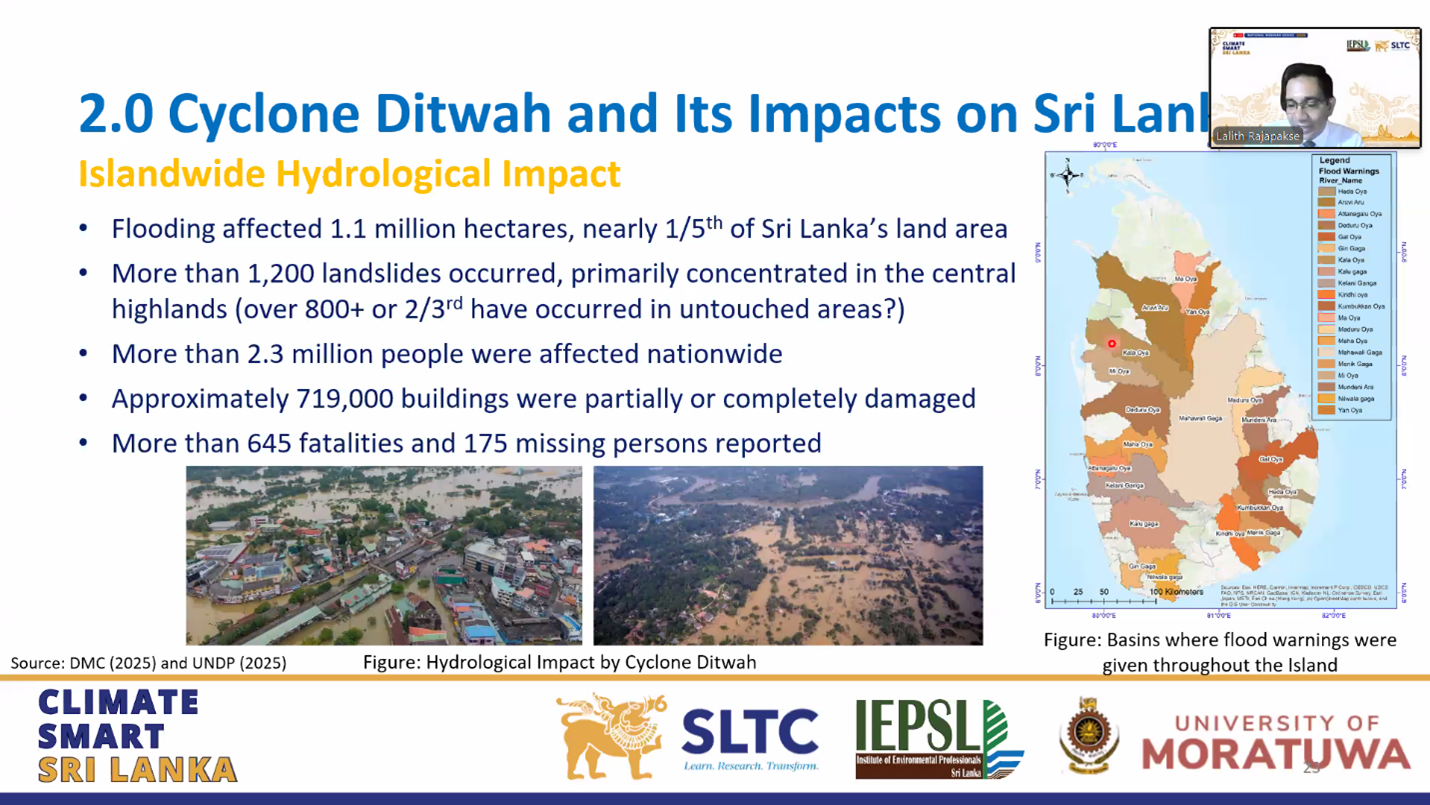
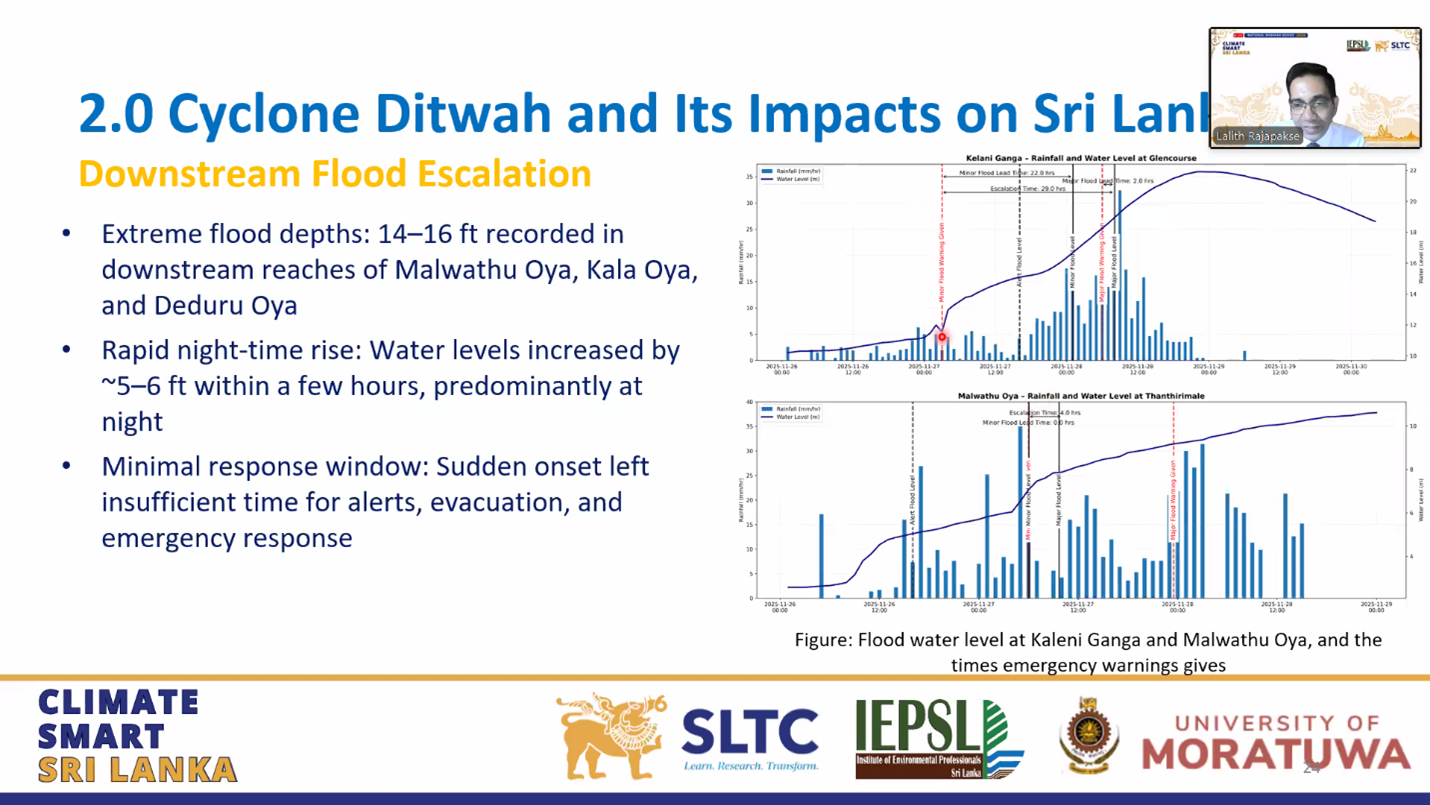
on recent experiences such as the Cyclone Ditwah event, he illustrated the
scale and complexity of emerging climate risks and their widespread impacts on
communities, infrastructure, and ecosystems.
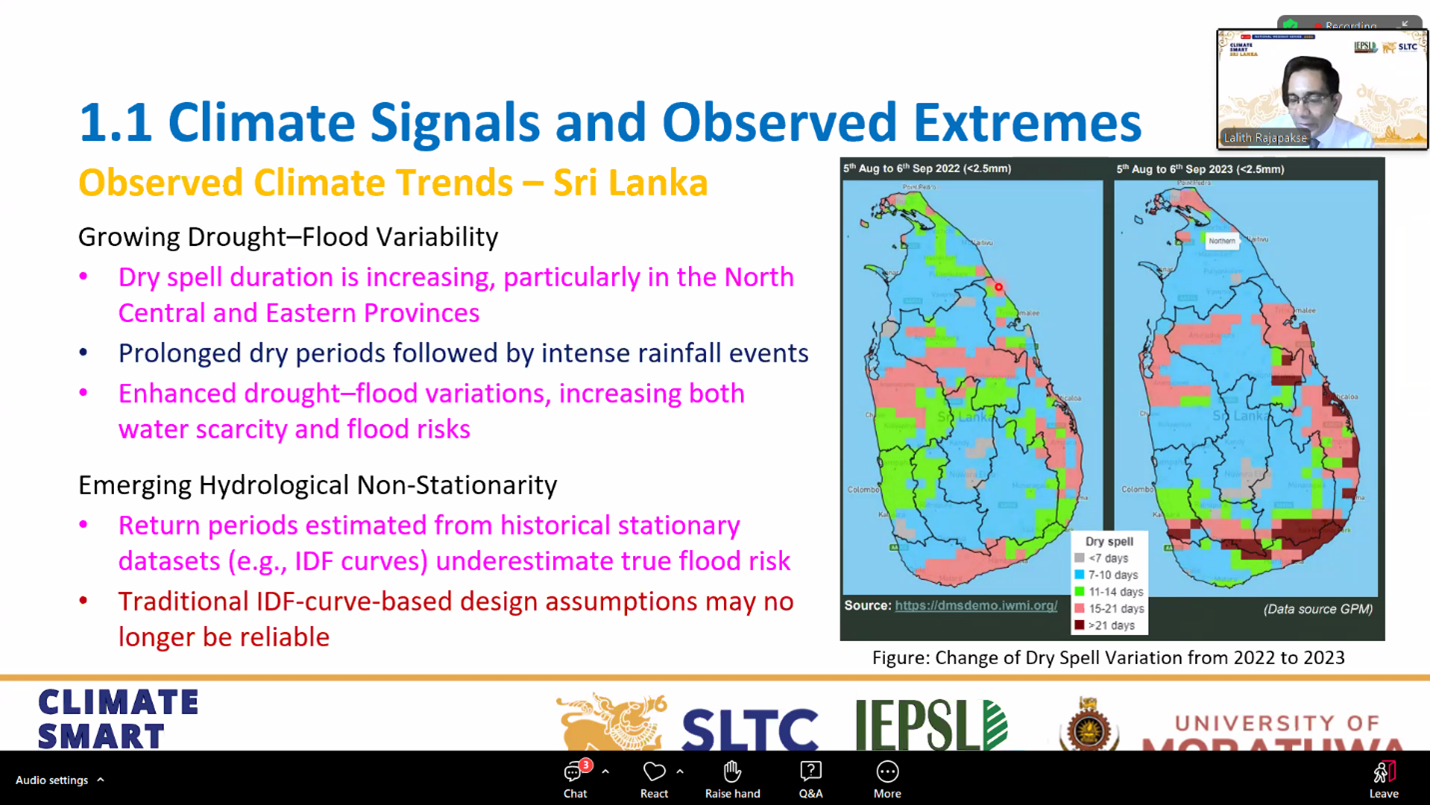
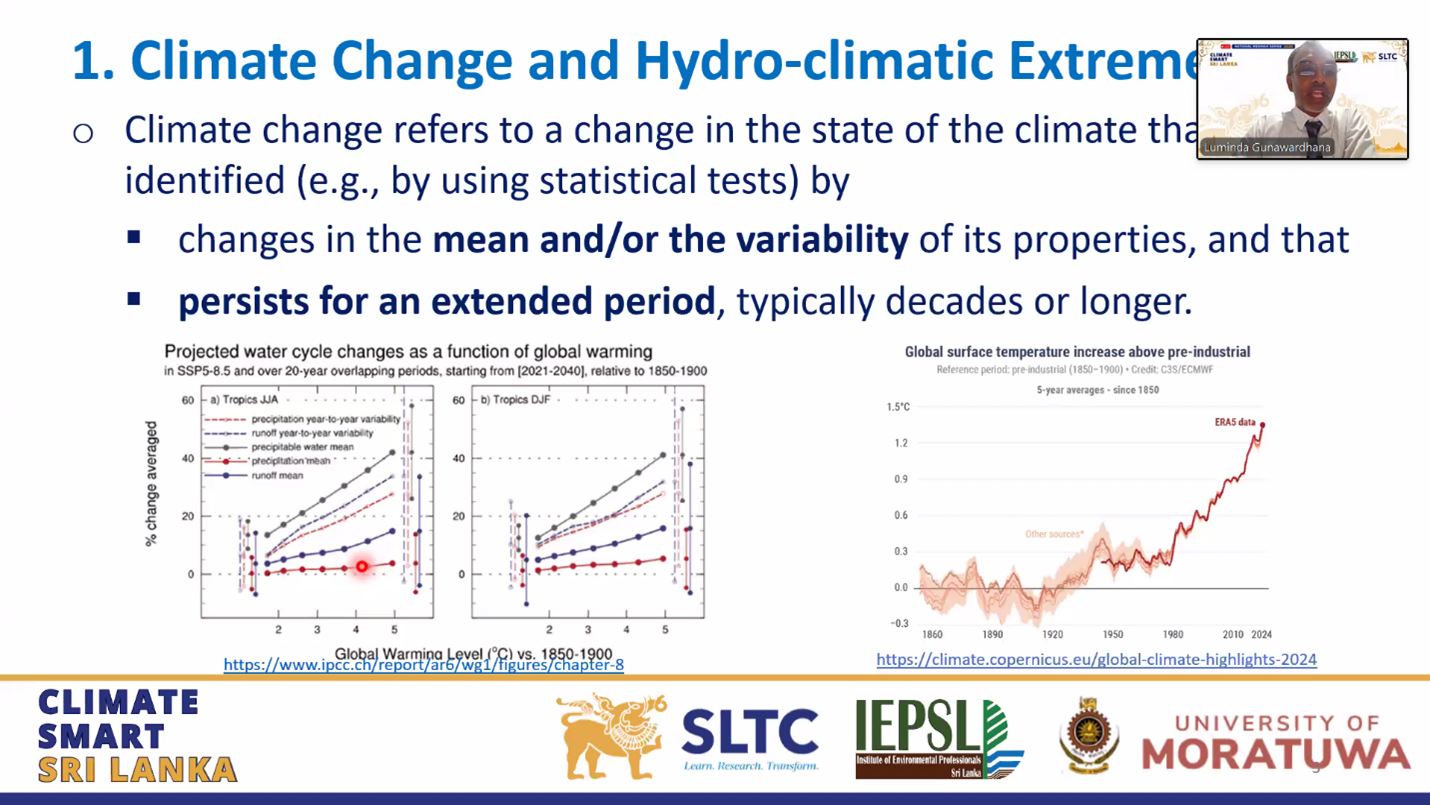
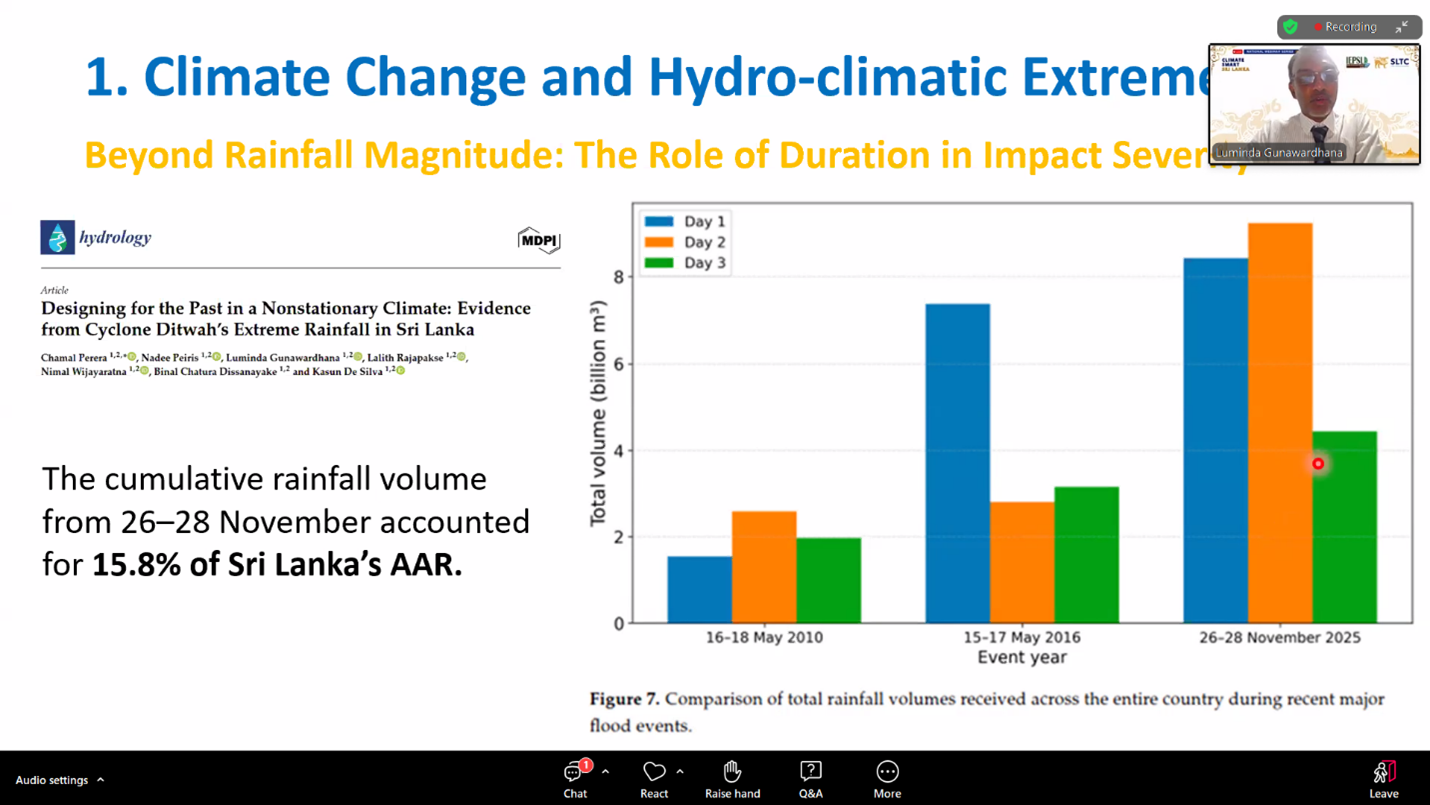
Dr. Luminda Gunawardhana focused on Sri Lanka’s increasing
climate variability, marked by extreme rainfall, drought-flood cycles, and
hydrological uncertainty. He discussed the lessons learnt from Cyclone Ditwa
and highlighted the need for advanced modelling, remote sensing, and
data-driven, adaptive strategies to strengthen flood resilience and
climate-informed decision-making.
The session, guided by the theme “From
Climate Risk to Climate Resilience: Science, Policy, and Action,” highlighted
the need for integrated approaches involving scientific institutions,
policymakers, and communities. The discussion aligned with national and
regional priorities on sustainable water management and climate adaptation.
The webinar attracted a diverse
audience of academics, professionals, and students, reflecting growing interest
in climate resilience in Sri Lanka.
Through its contribution, UMCSAWM
continues to strengthen its commitment to advancing sustainable water
management and climate adaptation, highlighting the importance of collaborative
efforts in addressing climate challenges.
Copyright © 2026 UNESCO Madanjeet Singh Centre for South Asia Water Management
WordPress Theme by WPZOOM