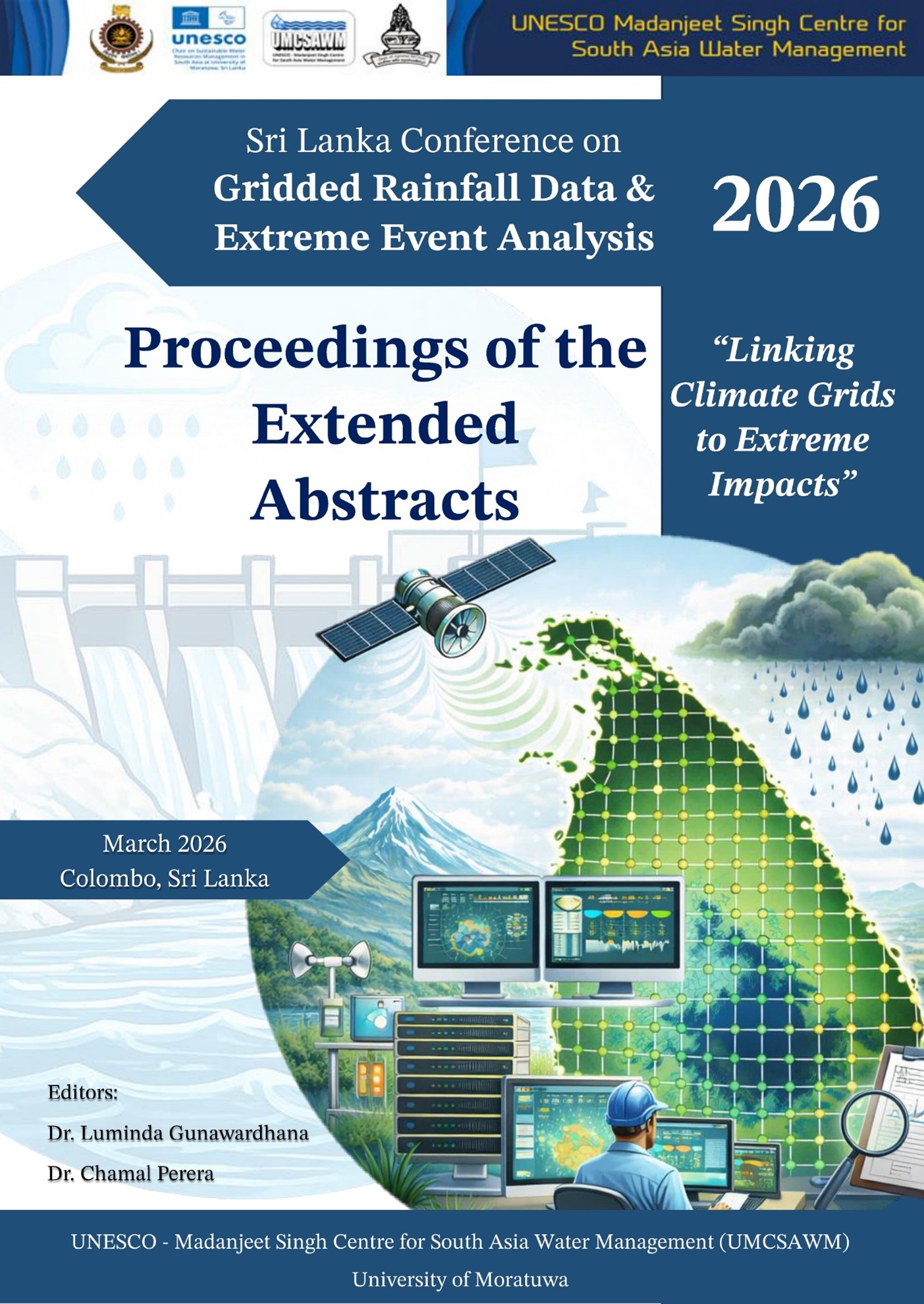

UMCSAWM Hosts National Conference on Gridded Rainfall Data and Extreme Event Analysis 2026 with Book Launch
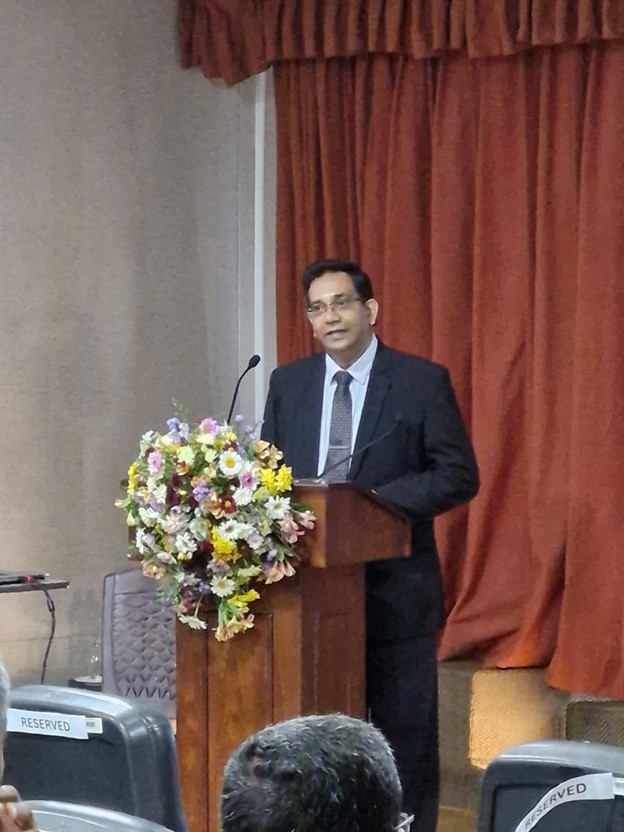
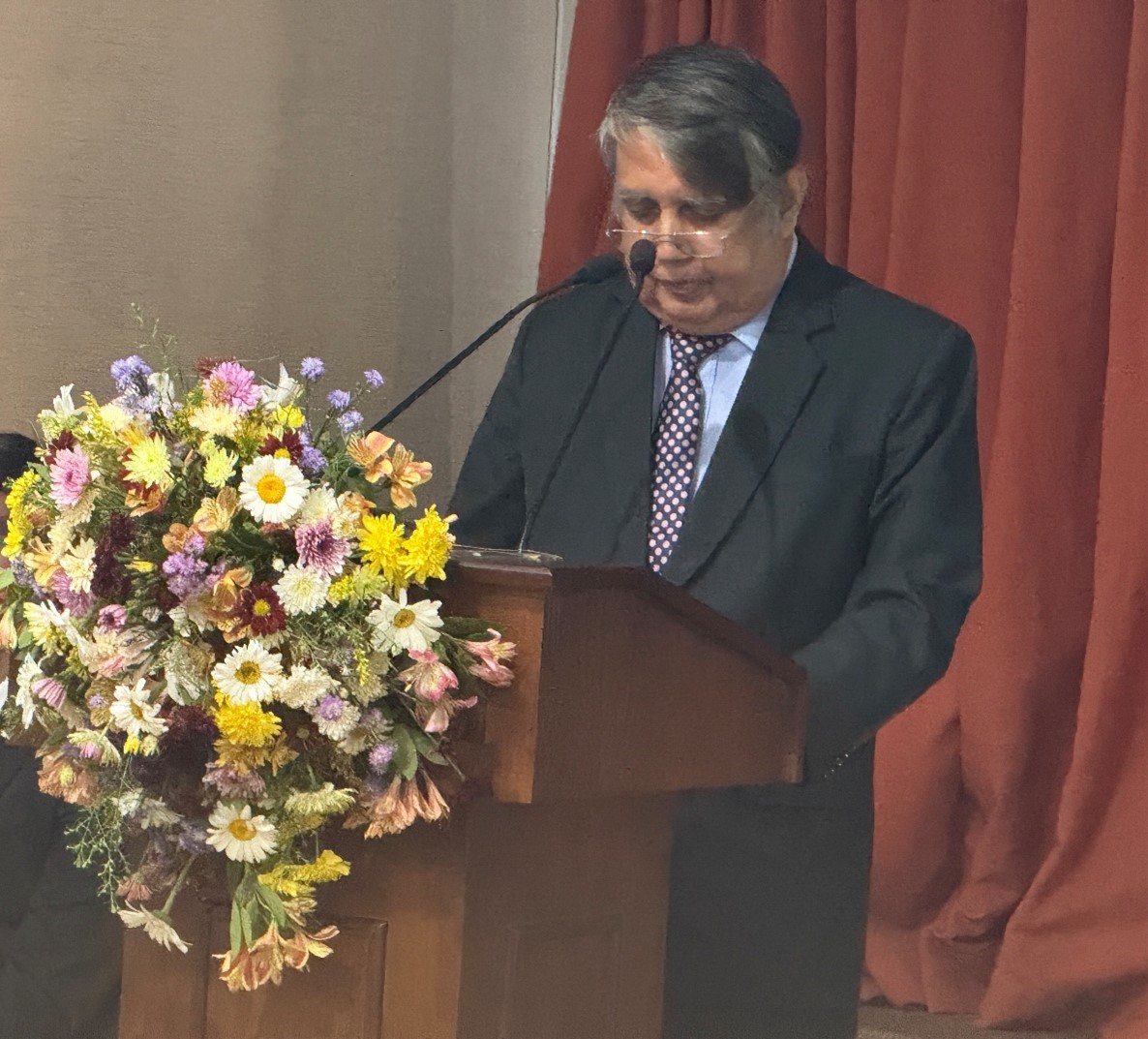
The UNESCO Madanjeet Singh Centre for South Asia Water Management (UMCSAWM), University of Moratuwa, successfully hosted the Sri Lanka Conference on Gridded Rainfall Data and Extreme Event Analysis: Linking Climate Grids to Extreme Impacts 2026 on 19 March 2026 at the Sri Lanka Institute of Development Administration (SLIDA) Sanhinda Auditorium.
The conference, organized under the Climate Action for Advanced Inclusive Education (CAFIED) Project, brought together academics, researchers, policymakers, and industry professionals to explore advancements in climate data analytics and their applications in addressing extreme hydrological events in Sri Lanka.
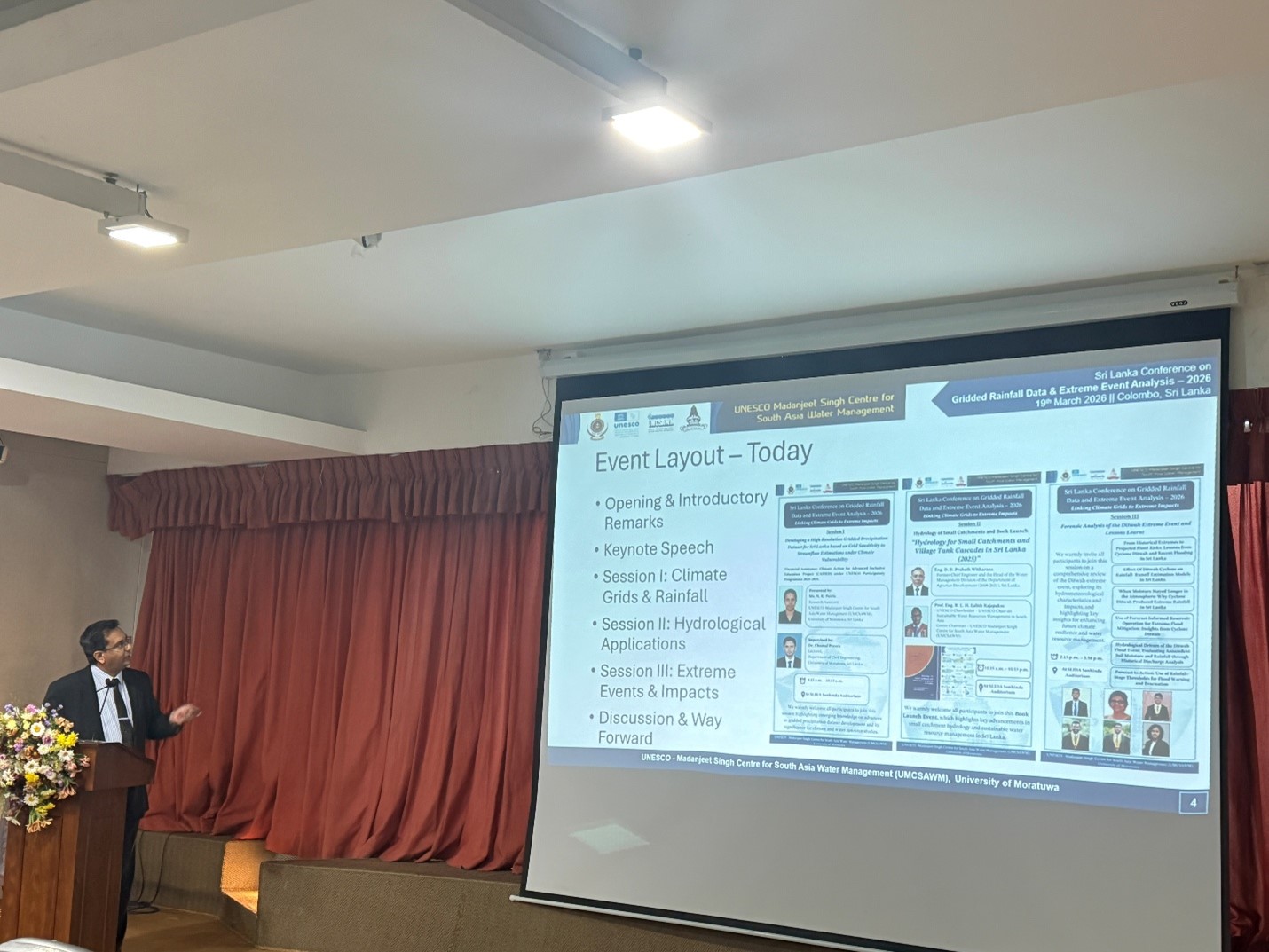
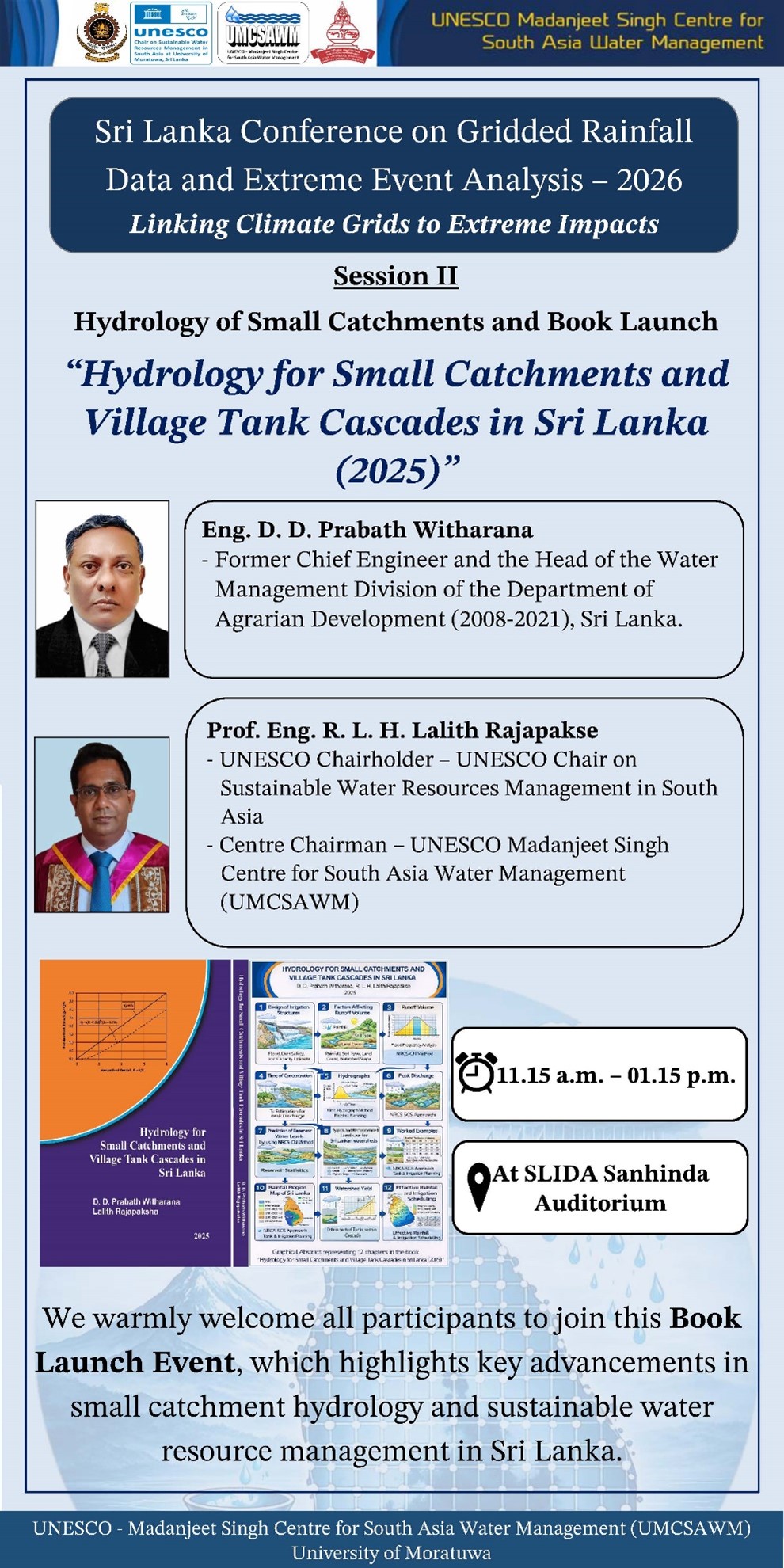
The programme featured three technical sessions: Gridded Rainfall Dataset for Sri Lanka, Hydrology of Small Catchments and Book Launch Event, and Forensic Analysis of Ditwah Extreme Event and Lessons Learned.
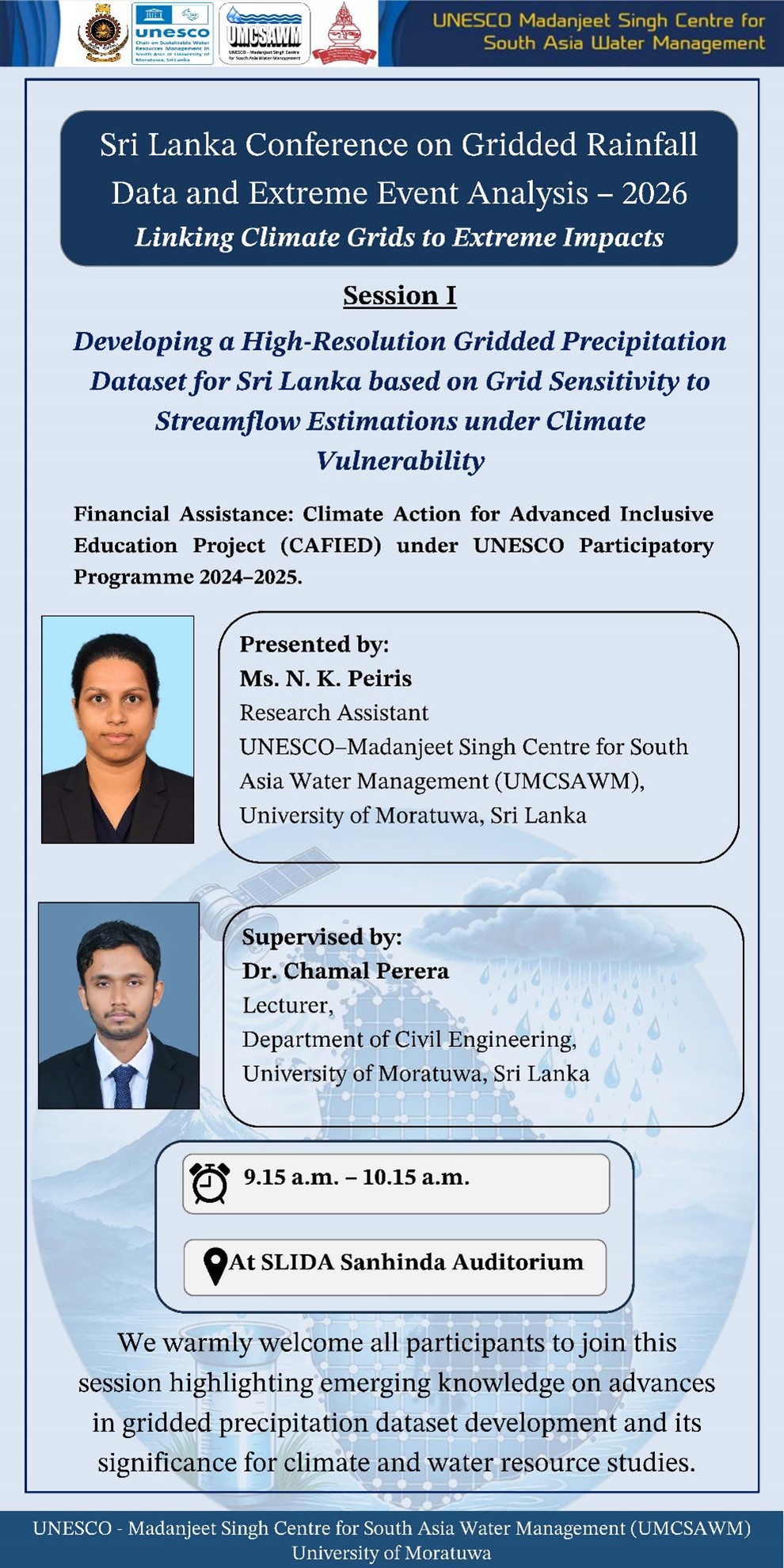
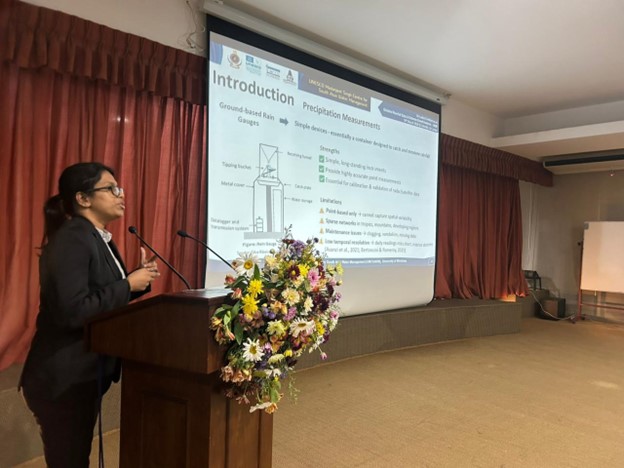
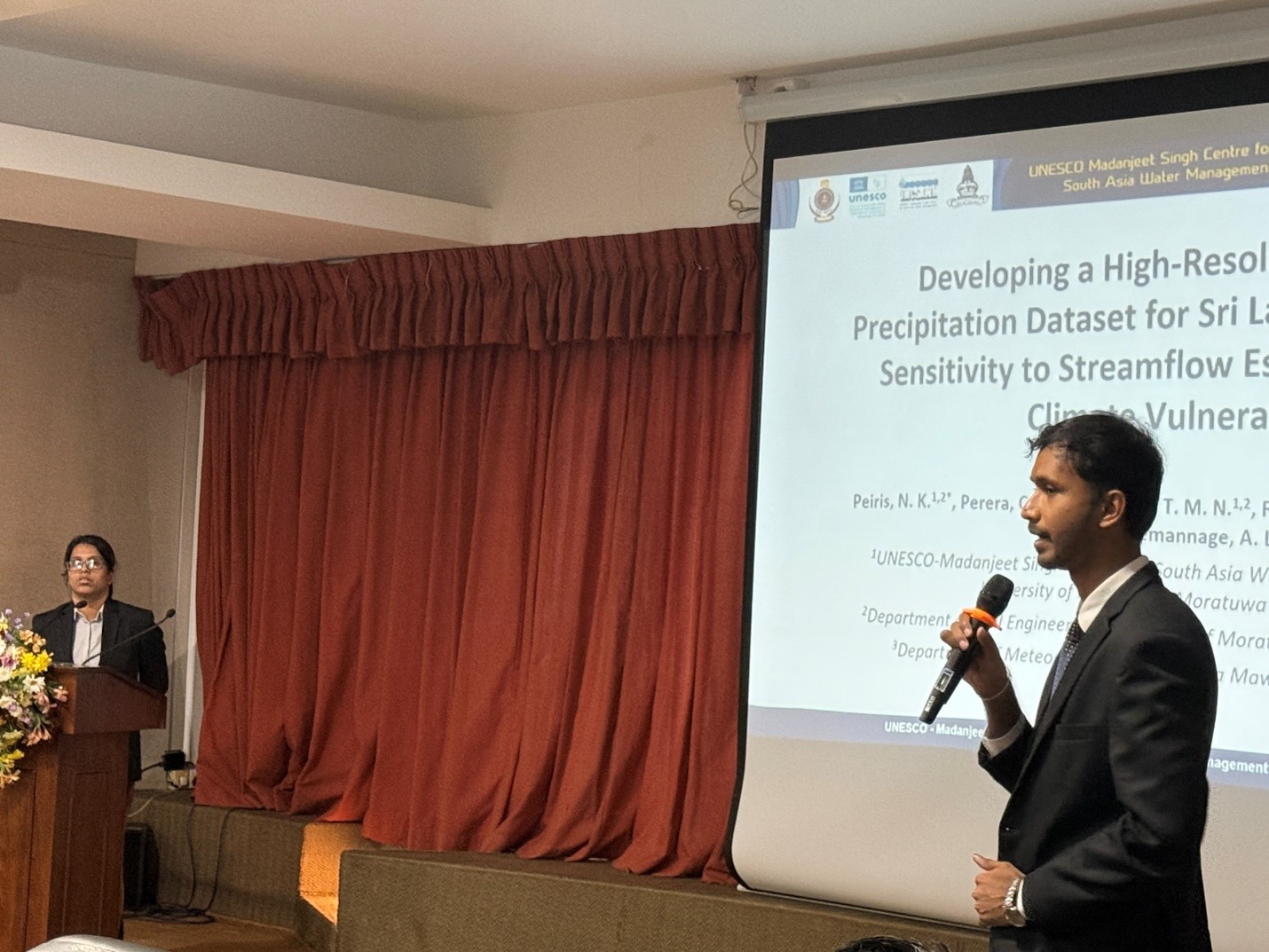
The first session focused on the development of a high-resolution gridded rainfall dataset for Sri Lanka. The opening presentation, delivered by Eng. Ms. Nadee Peiris showcased the development of a national gridded rainfall database and highlighted key findings of the UNESCO-funded CAFIED project. The session also featured a keynote address by Eng. D. D. Ariyaratna, Former Secretary to the State Ministry of Irrigation. His presentation, titled “Evolution of Scientific Approaches in Hydrology for Meso-catchments in Sri Lanka,” highlighted the progression of hydrological science in Sri Lanka from its early developments to the present.
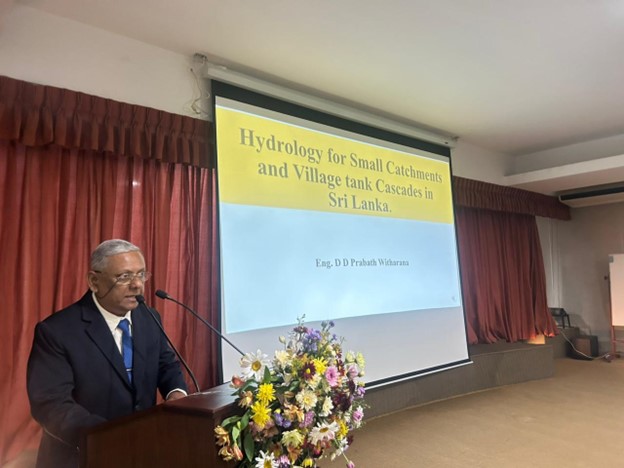
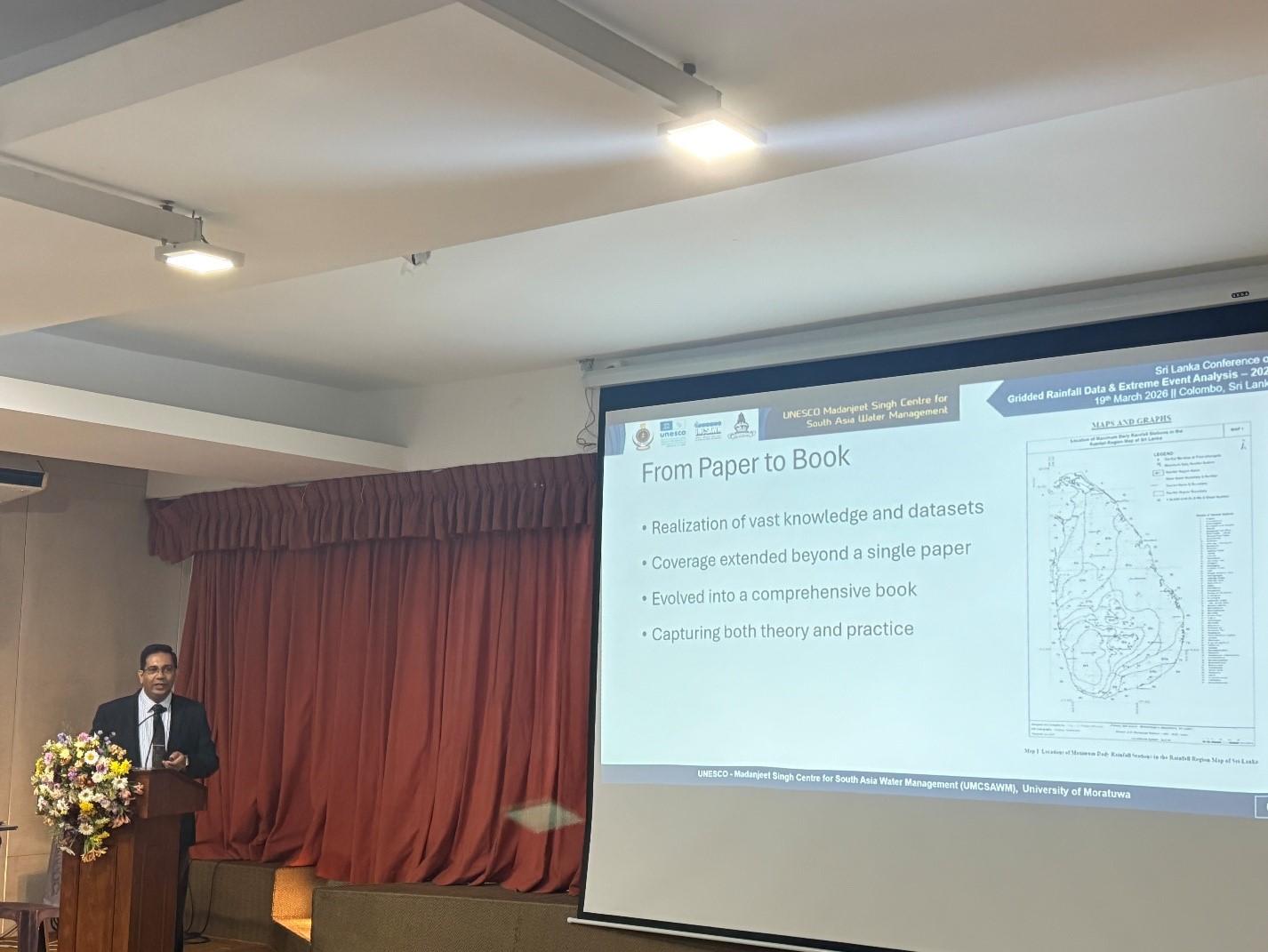
The second session highlighted the hydrology of small catchments and village tank cascade systems, which are integral to Sri Lanka’s traditional water management practices. A key highlight of the session was the official launch of the book “Hydrology for Small Catchments and Village Tank Cascade Systems in Sri Lanka,” co-authored by Eng. Prabath Witharana and Eng. Prof. Lalith Rajapakse. The publication addresses critical aspects of water resources management and climate adaptation, with particular emphasis on Sri Lanka’s unique hydrological systems and future design approaches for climatic extremes.
The third session focused on the forensic analysis of the Ditwah extreme event and the lessons learnt, where scholars and researchers presented comprehensive insights into the causes and impacts of the event. Research highlights were presented by Eng. Nalintha Wijayaweera, Eng. Ms. Nadeeka Wickramasinghe, Eng. Thushan Chamika, Eng. Suraj Tharuka, Eng. Sadeepa Karunarathna, and Eng. Ms. Paboda Jayawardana. The studies collectively identified key lessons and outlined future directions for enhancing flood risk management and improving resilience to extreme hydrological events in Sri Lanka.
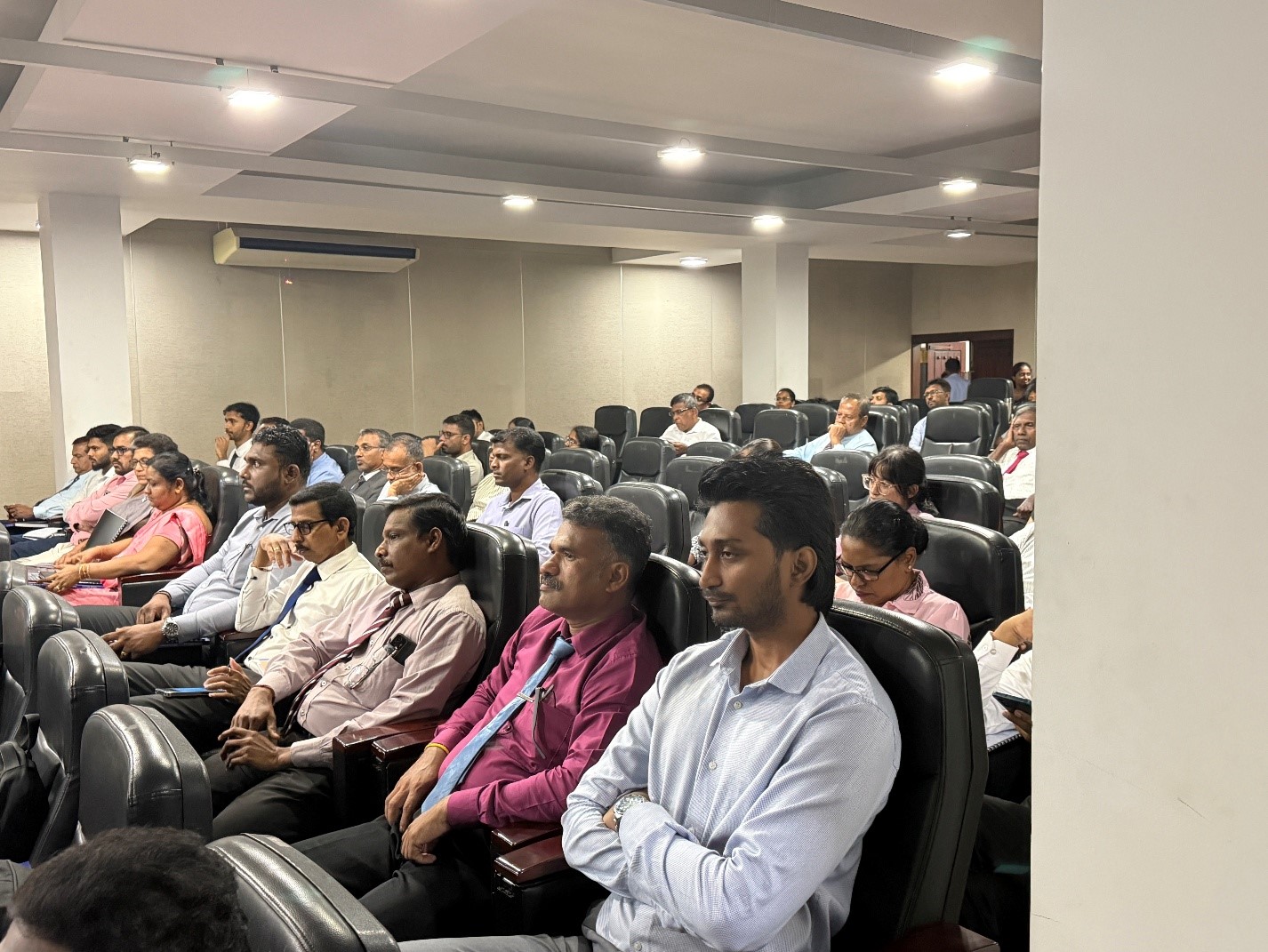
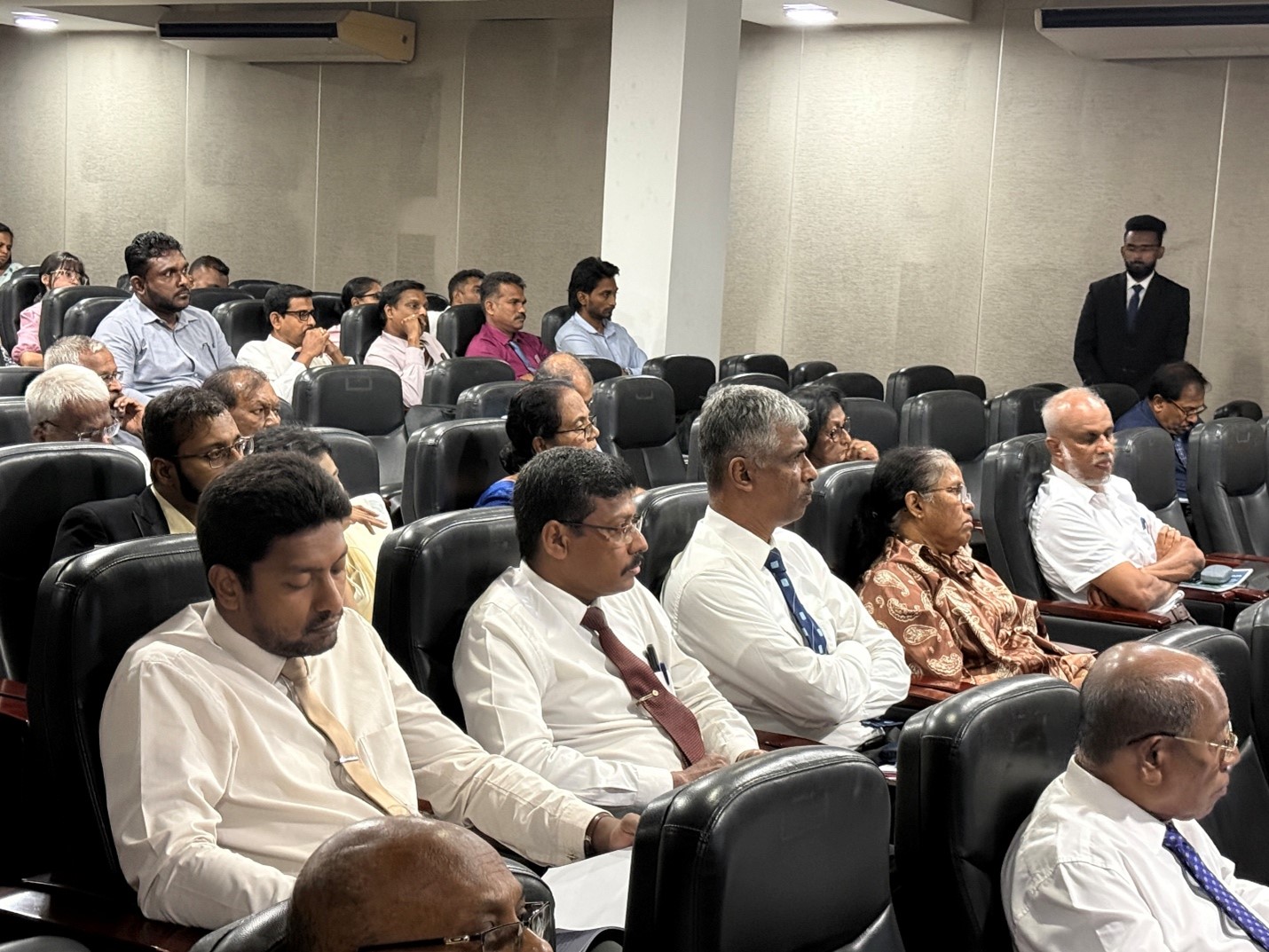
In addition to technical presentations, the event provided a valuable platform for knowledge exchange and collaborative dialogue among stakeholders. Participants engaged in discussions on integrating scientific research with policy and practice, reinforcing the importance of data-driven approaches in climate resilience planning.
Through this successful event, UMCSAWM further strengthened its role in advancing climate science, promoting interdisciplinary collaboration, and supporting evidence-based decision-making for sustainable development and disaster risk reduction in Sri Lanka.
Copyright © 2026 UNESCO Madanjeet Singh Centre for South Asia Water Management
WordPress Theme by WPZOOM